
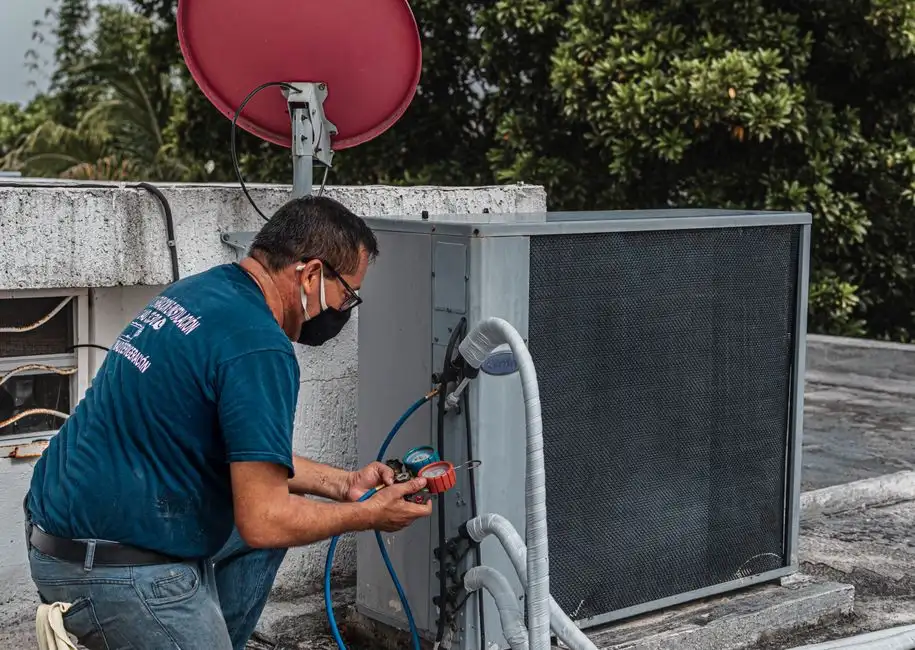
You prepare your furnace for Utah winter by changing the filter, testing the thermostat and heat cycle, clearing vents and the outdoor intake, checking the flame and blower, and booking a professional tune-up before the first hard freeze. In Utah, that work should be finished by mid-October, because canyon winds and early snow push overnight lows into the teens well before Thanksgiving.
Furnace preparation in Utah winter is not one task. It is a short list of small jobs that decide whether you spend January warm or waiting on a repair van. Below is the same checklist our technicians run through, plus what it costs in 2026 and the mistakes that cause most of the no-heat calls we take.
When Should You Prepare Your Furnace for Winter in Utah?
You should prepare your furnace for winter in Utah between late September and mid-October, before nighttime temperatures drop below freezing along the Wasatch Front. Once overnight lows hit the low 30s, furnaces start running daily, and any weak part fails under load.
Timing matters more here than in most states. Utah swings hard: an 80-degree afternoon in early October can turn into a 28-degree night two days later when a cold front drops out of Idaho. That first cold snap is when we get flooded with calls, and it is also when parts and appointment slots get scarce.
If you are reading this in November, you are not late. You are on time for the second wave. We still have room for furnace tune-ups before the holidays, and a furnace that gets serviced in November will run better through February than one that never gets touched.
One more reason to move now: Utah's inversions. From December through February, valley air traps cold and pollution under a lid of warm air. Furnaces run longer and dirtier during an inversion, and a clogged filter or a sooted burner makes that worse inside your home.
The Utah Winter Furnace Preparation Checklist
This winter furnace checklist for Utah covers the work you can do yourself in about 90 minutes, plus the one item that belongs to a licensed technician. Work top to bottom.
- Replace the air filter. A clean filter is the single cheapest thing you can do for your furnace. Use the size printed on the old filter frame, and match the MERV rating to your system.
- Test the thermostat. Switch from COOL to HEAT, set it 5 degrees above room temperature, and time how long the furnace takes to fire. More than 5 minutes to warm up is a warning sign.
- Check the heat cycle. Let the furnace run a full cycle. Listen for a steady low rumble, not banging, screeching, or a clicking that repeats.
- Clear supply and return vents. Pull furniture, rugs, and boxes at least 18 inches away from every return grille. Blocked returns starve the blower and overheat the heat exchanger.
- Inspect the outdoor intake and exhaust. On high-efficiency furnaces, the PVC pipes exiting the wall must be clear of snow, leaves, and dryer lint. Ice dams around those pipes cause pressure-switch lockouts.
- Look at the flame. Open the burner door on a gas furnace and check the flame color through the sight glass. A healthy flame is blue with a small orange tip. A yellow, lazy, or lifting flame means incomplete combustion.
- Vacuum the blower compartment and burner area. Dust and pet hair build up over summer. A soft brush attachment on a shop vac is enough.
- Test the blower. Set the fan to ON at the thermostat and confirm strong airflow from every register. Weak airflow on one side of the house usually means a duct problem, not a furnace problem.
- Check the condensate line and pump. High-efficiency furnaces pull a cup or more of water per hour out of the exhaust. A clogged trap or a dead pump shuts the furnace down in the middle of the night.
- Replace the batteries in your CO detectors. Put a fresh set in every carbon monoxide alarm and test each one. This is not optional in a state where furnaces run six months a year.
If any step turns up something you cannot explain, stop and call us. A furnace that smells like burning dust on the first startup is normal for 10 minutes. A furnace that smells like gas, burnt plastic, or rotten eggs is not, and you should shut it off at the breaker and open a window.
For homeowners who would rather hand the whole list to a technician, our Furnace Maintenance in Utah visit covers every item above plus combustion testing and a written report on part condition.
How Often Should You Change Your Furnace Filter in Utah Winter?
Change your furnace filter every 30 to 60 days during Utah winter, and every 30 days if you have pets, a wood stove, or a home older than 1980 with leaky ductwork. The 90-day filter label assumes a clean house in a mild climate. That is not Ogden in January.
Here is the practical rule we give customers. Buy two filters at a time. Write the install date on the frame with a Sharpie. When you change the filter, look at it: if you can see a gray mat of dust across the pleats, you waited too long.
Filter choice matters too. A MERV 8 to MERV 11 pleated filter handles most Utah homes well. Going to MERV 13 or higher on an older furnace can choke the airflow and force the blower to work harder than it was designed to. If you want hospital-grade filtration, ask us about a media cabinet or an inline filter that is sized for your system.
One more Utah-specific note: during inversion season, outdoor particulate counts climb. If anyone in your house has asthma or allergies, step up to a MERV 11 and change it on the shorter end of the range. The filter is doing more work in January than it does in September.
Furnace Safety Checks Utah Homeowners Should Not Skip
A furnace safety check in Utah should include a carbon monoxide test, a heat exchanger inspection, a gas leak check at every connection, and a flame sensor and ignitor check. These are the four items that separate a real tune-up from a filter swap.
Carbon monoxide is the one that matters most. It is colorless, odorless, and it kills roughly 400 Americans a year, with thousands more sent to emergency rooms. Utah's long heating season and tightly sealed modern homes make it a real risk, not a hypothetical one.
What to look for on your own
- Streaks of soot or black marks around the burner compartment.
- A yellow or orange flame instead of blue.
- Moisture on the inside of windows near the furnace closet.
- A headache or nausea that improves when you leave the house.
- A CO alarm that has ever chirped, even once.
If you see any of those, shut the furnace off and call us. Do not run the furnace to "see if it happens again."
What a technician checks
We use a combustion analyzer to measure CO in the flue gas and a handheld detector to sweep every gas connection and the heat exchanger. We also check the draft inducer motor, the pressure switch, and the flame rollout switch. If the heat exchanger is cracked, we tell you straight and give you options: repair if the furnace is under 10 years old, Furnace Replacement in Utah if it is not.
What a Furnace Tune-Up Before Winter in Utah Actually Covers
A furnace tune-up before winter in Utah covers cleaning, testing, and adjusting roughly 20 components, and it takes 60 to 90 minutes on a standard residential furnace. Typical 2026 pricing in this area runs $89 to $189 for a standard tune-up, and $200 to $350 if the technician finds a part that needs replacing on the spot.
Here is what we actually do during a tune-up:
- Clean the burners and the flame sensor.
- Test and adjust the ignitor.
- Check the heat exchanger for cracks and corrosion.
- Measure gas pressure at the manifold.
- Test the blower motor amp draw and capacitor.
- Check the draft inducer and pressure switch.
- Inspect the flue and venting.
- Run a combustion analysis and record CO and CO2 readings.
- Verify the thermostat calibration and heat anticipator setting.
- Replace the filter if you have one on hand.
You get a written report with the readings. If everything is in spec, you know your furnace is ready. If something is marginal, you have a heads-up in October instead of a no-heat call in January.
We also see a lot of furnaces in older homes around Furnace Repair in Bountiful, where 1960s and 1970s builds still have original ductwork and undersized returns. Those systems need a tune-up plus a duct check, because the furnace is often fine and the ducts are the problem.
Common Mistakes We See Every Fall
The same handful of mistakes cause most of the furnace failures we repair each winter. None of them are exotic. All of them are avoidable.
- Waiting for the first cold snap. Everyone calls the same week. Parts warehouses run short, and appointment slots fill two weeks out.
- Running a MERV 13 filter on an old furnace. Restricted airflow overheats the heat exchanger and shortens its life.
- Closing vents in unused rooms. This raises static pressure in the duct system and can crack a heat exchanger over a season or two.
- Ignoring a flashing LED code. Modern furnaces tell you what is wrong with a blink pattern on the control board. Write it down and call us.
- Blocking the outdoor intake with landscaping. Bushes and mulch beds swallow those PVC pipes. Keep 12 inches of clear space around them.
- Skipping the CO detector test. A detector with dead batteries is a plastic box on the wall.
- Using the furnace as a construction heater. Drywall dust and sawdust destroy blower motors and clog secondary heat exchangers.
If you catch any of these mid-season, call us before the problem gets worse. A $150 repair in November beats a $4,000 replacement in February.
When to Call a Professional
Call a professional when your furnace will not fire, when you smell gas, when the CO detector goes off, when the flame is yellow, or when you hear banging, screeching, or repeated clicking from the unit. Those are not DIY problems.
We also want to hear from you if the furnace runs but the house never gets warm, if one room stays cold while the rest is fine, or if your gas bill jumped 30 percent over last winter with no change in habits. Those point to airflow, duct, or combustion issues that need instruments, not guesses.
Furnace Pros Utah handles furnace repair, tune-ups, and safety inspections across the Wasatch Front and rural Utah. Our technicians are state-licensed and carry combustion analyzers on every truck. We quote the repair before we start, and we tell you when a repair is not worth doing.
If you are not sure whether your furnace needs a repair or a tune-up, start with a diagnostic visit. We will tell you what we find, what it costs to fix, and what happens if you wait.
Frequently Asked Questions
How do I prepare my furnace for winter in Utah?
Change the filter, test the thermostat and heat cycle, clear all vents and the outdoor intake, check the flame color, vacuum the burner compartment, test your CO detectors, and book a professional tune-up. Finish by mid-October, before the first hard freeze along the Wasatch Front.
When should I prepare my furnace for winter in Utah?
Late September through mid-October is the ideal window. Utah's first hard freezes typically hit between mid-October and early November, and appointment slots fill fast once the cold arrives. November service is still fine, just less convenient.
What should be on a furnace winter checklist in Utah?
Filter replacement, thermostat test, heat cycle check, vent clearance, outdoor intake inspection, flame color check, blower test, condensate line check, CO detector batteries, and a professional tune-up. That covers about 90 percent of the failures we see each winter.
How often should I change my furnace filter in Utah winter?
Every 30 to 60 days during heating season. Go to 30 days if you have pets, a wood stove, or a home with leaky ducts. During inversion season, homes with allergy sufferers should change on the shorter end of that range.
Should I get a furnace tune up before winter in Utah?
Yes. A tune-up runs $89 to $189 in 2026, takes 60 to 90 minutes, and catches the marginal parts that fail on the coldest night of the year. It also keeps your manufacturer warranty valid, since most brands require annual service.
Get Help with Furnace Repair in Utah
If your furnace is acting up, or you just want a technician to look it over before the cold settles in, we can help. We handle Furnace Repair in Utah for homeowners from Brigham City down to Beaver, and we keep common parts on the truck so most repairs finish in one visit.
Call (866) 961-2544 to schedule a tune-up or a diagnostic visit. We will tell you what your furnace needs, what it costs, and whether it is worth fixing.