
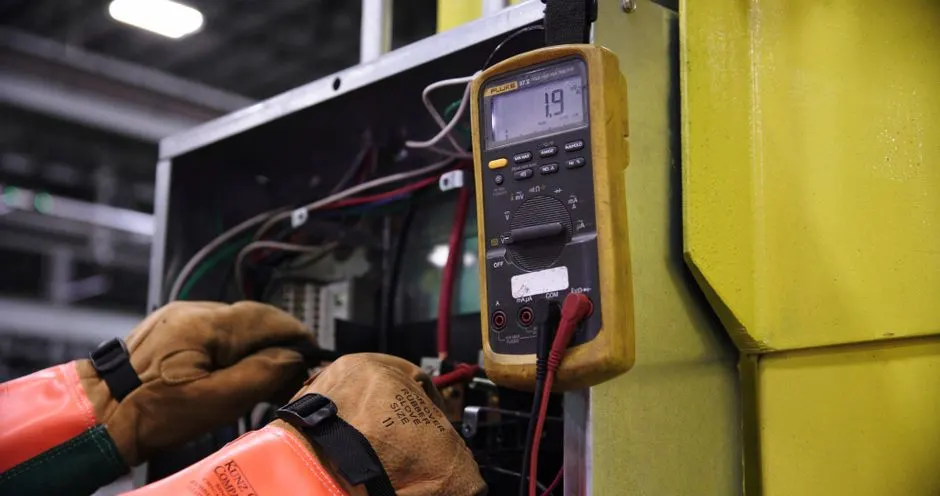
Utah's dry climate affects your furnace in two specific ways: it pulls moisture out of the air until indoor humidity drops into the teens, and it keeps fine dust and grit suspended long enough to load your filter and blower wheel faster than in humid states. The practical answer is a filter change every 1-3 months, a professional tune-up every fall, and a whole-home humidifier if your indoor air drops below 30% relative humidity. Everything below is the maintenance schedule we run on Utah homes, why each step matters here specifically, and what it costs in 2026.
We're Furnace Pros Utah, and we work on furnaces across the Wasatch Front and the rural counties where winter runs from October into April. Most of the calls we get in January were preventable with two hours of maintenance in September.
How Utah's Dry Climate Actually Affects Your Furnace
Utah's dry climate affects your furnace by increasing dust infiltration and lowering return-air humidity, which together raise static electricity, dry out blower bearings, and make the system work harder to hold a set temperature. Our average outdoor relative humidity in Salt Lake City sits near 30% in summer and drops into the 50-60% range only during winter storms; indoor air without humidification routinely lands between 15% and 25% in January.
Three things happen to a furnace in that environment:
- Dust loading accelerates. Without moisture to weigh particles down, fine dust stays airborne and gets pulled through the return. A 1-inch filter that lasts three months in Ohio can be choked in six weeks here.
- Static discharge builds. Low humidity means carpet shocks and, more importantly, more stress on control boards and flame sensors.
- Dry air feels colder. At 20% humidity, 70°F feels like roughly 66°F. Homeowners respond by nudging the thermostat up 2-3 degrees, which is a direct fuel-cost increase.
Furnace maintenance tips for Utah's dry climate start with accepting that this is a dust-and-humidity problem before it's a mechanical one. If you want the full picture of what a proper service visit covers, our Furnace Maintenance in Utah page walks through the checklist we run on every unit.
How Often Should You Maintain a Furnace in Utah's Dry Climate?
You should maintain your furnace once a year in Utah's dry climate, ideally in September or early October before the first hard freeze, with a filter change every 1-3 months depending on filter thickness and whether you have pets. That annual visit is the baseline; homes in dusty areas like Eagle Mountain, Tooele, and the west bench of Utah County often need a mid-season filter swap and a blower inspection in January.
Here's the schedule we hand to customers:
- September: professional tune-up - combustion analysis, flame sensor cleaning, blower amp draw, capacitor test, heat exchanger inspection.
- October through March: filter check every 30 days. Replace 1-inch filters monthly, 4-inch media filters every 3-4 months.
- January: quick visual on the flue, listen for new noises, check humidity level.
- April: end-of-season filter change and a look at the condensate line if you have a high-efficiency unit.
A furnace maintenance schedule for Utah's dry climate is really two schedules - one for the equipment and one for the air going through it. Skipping the air side is why so many furnaces here fail at year 12 instead of year 20.
Furnace Filters in a Dry, Dusty Climate
Furnace filter selection in Utah's dry climate matters more than most homeowners realize, because a filter that's too restrictive starves airflow and a filter that's too loose lets dust reach the blower wheel. The sweet spot for most Utah homes is a MERV 8 to MERV 11 filter, changed on the schedule above.
What we see on service calls:
- MERV 13+ in a 1-inch slot. These clog fast and choke airflow. If you want MERV 13, use a 4- or 5-inch media cabinet.
- Wrong size, taped in. A filter that doesn't seal lets unfiltered air bypass it entirely. Measure the slot, not the old filter.
- Reusable electrostatic filters. They work, but only if you wash them every 3-4 weeks. Most people don't.
If you're not sure what your system was designed for, our technicians check filter sizing and static pressure on every Furnace Tune-Up in Utah visit - it's a two-minute measurement that prevents a lot of blower failures.
Furnace Humidity in Utah: Why Your Home Feels Colder Than It Is
Furnace humidity in Utah is the piece most homeowners skip, and it's the one with the fastest payback. Adding a whole-home humidifier to keep indoor air between 35% and 45% relative humidity lets you drop the thermostat 2-3 degrees and feel the same comfort - roughly a 4-6% reduction in heating cost for every degree you don't need.
A bypass humidifier installed on the supply plenum costs $450-$900 in 2026, including labor. A steam humidifier, which works better in very dry homes and doesn't rely on furnace runtime, runs $1,200-$2,200 installed. Both need a water panel or canister change once a year - that's a $30-$80 part.
Signs you need one:
- Static shocks every time you touch a doorknob.
- Wood floors and cabinet joints separating in winter.
- Nosebleeds, dry throat, and cracked skin that clear up when you travel.
- Hygrometer reading below 30% in January.
You can buy a $15 hygrometer online and know your answer in an hour. If it reads 22%, a humidifier is cheaper than the extra gas you're burning to compensate.
Furnace Cleaning for Utah Dust: What Actually Needs Cleaning
Furnace cleaning for Utah dust means more than swapping a filter - it means the blower wheel, the secondary heat exchanger on high-efficiency units, the inducer motor, and the burner compartment. Dust that makes it past the filter packs onto the blower wheel, throws it out of balance, and shortens the motor's life.
What we clean on a standard visit:
- Blower wheel and housing. A dirty wheel is the number one cause of the rumbling noise we get called about in December.
- Burner compartment. Dust on burners causes uneven flames and delayed ignition.
- Flame sensor. A 400-grit scrub and it's back to reading microamps correctly.
- Condensate trap and line on 90%+ AFUE furnaces. Utah's dry air doesn't stop these from clogging with mineral scale.
- Return grilles and duct boots. Drywall dust from any recent remodel lives here for years.
If you've had a remodel in the last two years, get the ducts and blower looked at before winter. We cover the full scope on our Furnace Cleaning in Utah page.
Furnace Efficiency in Utah's Dry Climate: What Moves the Number
Furnace efficiency in Utah's dry climate is driven by airflow, combustion tuning, and how hard the system has to run to satisfy a thermostat setting that's compensating for dry air. A furnace rated at 96% AFUE can perform at 80% if the filter is choked and the blower is dirty.
The measurable items:
- Static pressure. Target is under 0.5 in. w.c. on the supply and under 0.8 total. Above that, airflow is restricted.
- Temperature rise. Should land inside the range on the data plate - usually 35-65°F. Outside that range means a combustion or airflow problem.
- Gas pressure. Manifold pressure should match the spec, typically 3.5 in. w.c. for natural gas.
- Flame sensor microamps. Above 4 µA is healthy; below 2 µA causes intermittent lockouts.
Each of these is a number, not an opinion. If your technician isn't writing them down, you're paying for a filter change and a handshake.
Common Mistakes We See on Utah Furnace Maintenance Calls
The most common furnace maintenance mistake in Utah is treating a dry-climate furnace like a humid-climate one - same filter schedule, same tune-up timing, no humidity control. That single assumption causes most of the premature failures we diagnose.
Others we see weekly:
- Closing registers in unused rooms. This raises static pressure and can crack a heat exchanger over a few seasons.
- Setting the thermostat back 10+ degrees at night. Recovery in the morning runs the furnace at full fire for an hour, which is harder on it than steady operation.
- Ignoring the first odd noise. A new rumble, whistle, or click in November is a $200 repair. In February it's often a $1,400 blower.
- Never checking the flue. Birds and wasp nests in the intake or exhaust termination are a real problem in Utah's rural counties.
- DIY gas work. We've seen homeowners replace a thermocouple and crack a manifold in the process. Gas side is not a DIY zone.
One more: running a furnace past 18 years because it "still works." At that age, a cracked heat exchanger is a carbon monoxide risk, and no amount of maintenance reverses metal fatigue.
When to Call a Professional
Call a professional when you smell gas, hear a new noise that repeats, see a yellow or orange burner flame instead of blue, or your carbon monoxide detector has ever chirped. Those are same-day calls, not next-week calls.
For everything else - annual tune-ups, filter sizing, humidity assessment, blower cleaning - the math favors having us out once a year rather than guessing. A standard furnace tune-up in Utah runs $89-$189 in 2026, and a mid-season repair averages $280-$650. The tune-up is the cheaper line item by a wide margin.
We serve the whole state, from the Wasatch Front down to the rural communities. If you're in the south end of Salt Lake Valley, we handle a lot of Furnace Repair in Bingham Canyon where older homes and mine-era construction create their own airflow quirks. Up north, Furnace Repair in Brigham City calls in January are usually filter and blower issues from the previous fall being skipped.
If your system is past 15 years and you're weighing repair against replacement, our Furnace Replacement in Utah page lays out the decision math. And if you just want the annual service handled and the numbers written down, that's what we do every day.
Frequently Asked Questions
How does Utah's dry climate affect my furnace?
It loads the filter and blower with fine dust faster and drops indoor humidity to 15-25%, which makes rooms feel 3-4°F colder than the thermostat reads. That drives homeowners to raise the setpoint, which raises gas use. Humidity control and a tighter filter schedule solve most of it.
How often should I maintain my furnace in Utah's dry climate?
Once a year professionally, in September or early October, plus a filter change every 1-3 months. Homes with pets, recent remodels, or in dusty areas like Tooele and Eagle Mountain often need a mid-season filter swap in January as well.
What furnace maintenance is needed for Utah's dry climate?
Filter replacement on a 1-3 month cycle, annual blower and burner cleaning, flame sensor service, combustion analysis, static pressure measurement, and a humidity check. If indoor humidity is below 30%, add a whole-home humidifier to the plan.
Can a humidifier help my furnace in Utah?
Yes. Keeping indoor air at 35-45% relative humidity lets you lower the thermostat 2-3°F and feel the same comfort, cutting heating cost roughly 4-6% per degree. A bypass humidifier installed runs $450-$900 in 2026; a steam unit runs $1,200-$2,200.
How much does furnace maintenance cost in Utah?
A standard tune-up runs $89-$189 in 2026. A mid-season repair averages $280-$650. A whole-home humidifier adds $450-$2,200 depending on type. Annual maintenance is the cheapest line item on the list and prevents most of the expensive ones.
Get Help With Furnace Repair in Utah
If your furnace is making noise, running long, or you just haven't had it serviced since last winter, we'll come out, run the numbers, and tell you exactly what it needs. We work on every major brand and every furnace type in Utah homes.
Call Furnace Pros Utah at (866) 961-2544 to schedule your fall tune-up or a same-day repair.